
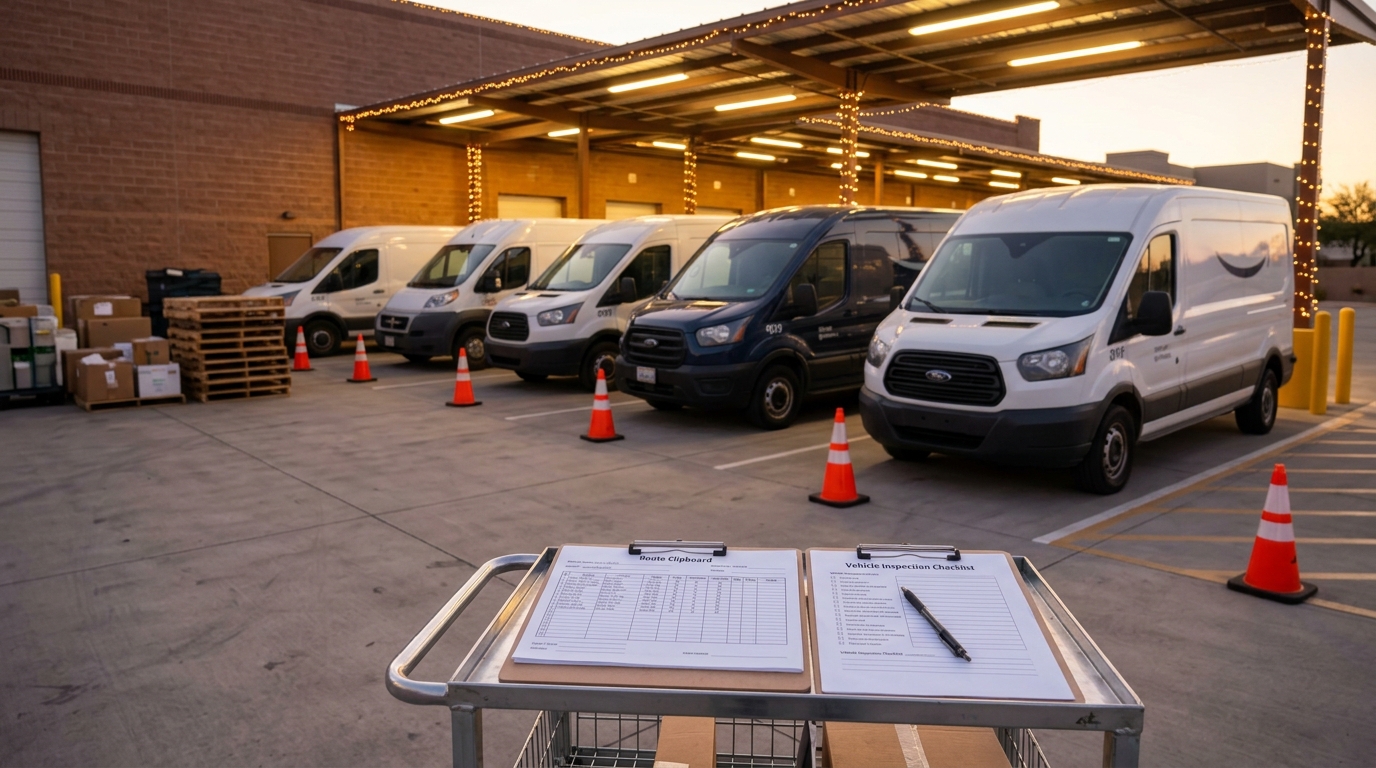
Holiday-season commercial auto risk management for local business fleets
The holiday season can create a sharp increase in deliveries, service calls, employee travel, and time-sensitive customer requests. For Southern Arizona businesses that use company vehicles, preparation can help reduce avoidable disruptions while supporting safer operations. A thoughtful review of drivers, vehicles, policies, and insurance protection is an important part of managing seasonal activity.
At DM Vasquez Insurance Agency, we work with Tucson and Southern Arizona businesses to evaluate commercial auto insurance as part of a broader small-business insurance strategy. The following educational considerations can help business owners prepare their vehicle operations for a busy holiday period. Every business has different exposures, so these points should be adapted to the company’s operations and internal procedures.
Confirm Who Is Authorized to Drive
Busy schedules may tempt a business to hand vehicle keys to whoever is available. Before doing so, it is helpful to confirm that each driver has been properly authorized under company procedures and is an appropriate driver for the vehicle assigned. This may include verifying that the employee has the required license, understands the vehicle’s purpose and restrictions, and has received the company’s driving expectations.
A current list of authorized drivers can also make it easier to manage scheduling changes. If a new employee, seasonal worker, or temporary helper may drive, the business should review that arrangement before the person gets behind the wheel. A clear authorization process supports accountability and may help avoid confusion after an incident.
Schedule Preventive Vehicle Maintenance
Holiday demand can expose maintenance issues that were easy to overlook during slower periods. A vehicle inspection plan can include tires, brakes, lights, windshield wipers, fluid levels, battery condition, mirrors, and cargo restraints. Businesses that operate vans, trucks, or specialty vehicles should also review equipment that is specific to those vehicles.
Southern Arizona roads bring their own considerations. Long drives between Tucson job sites, higher traffic near shopping areas, nighttime travel, and changing weather conditions can all affect vehicle performance. Keeping maintenance records organized helps demonstrate that the business is taking reasonable steps to keep its vehicles operational and safe.
Set Clear Expectations About Distracted Driving
Distracted driving is a year-round concern, but it can become more pronounced when employees are navigating unfamiliar delivery routes, responding to customer calls, or managing last-minute schedule changes. Businesses can reinforce a simple expectation: driving requires the driver’s full attention.
Company policies may address mobile phone use, navigation systems, eating while driving, and communication with dispatch. If employees need to make a call, respond to a message, or update a route, they should do so only when safely parked. Managers can support this expectation by avoiding communication practices that pressure drivers to respond immediately while the vehicle is moving.
Manage Delivery Pressure Without Encouraging Unsafe Choices
Holiday customers often expect fast service, and businesses may face tighter delivery windows or a larger volume of appointments. However, delivery pressure should not create an environment where speeding, aggressive driving, overloaded vehicles, or skipped inspections feel necessary.
Consider building realistic travel time into schedules, accounting for traffic and loading time, and giving employees a clear process for reporting delays. When a driver knows that a late delivery can be communicated without punishment, the driver may be less likely to make unsafe decisions to recover lost time. This approach can protect customer relationships while supporting safer fleet operations.
Keep Thorough Documentation
Documentation is an often-overlooked part of commercial vehicle management. Before the holiday rush begins, businesses can review whether they are consistently keeping driver authorization records, maintenance logs, vehicle inspection checklists, incident reports, training acknowledgments, and certificates of insurance where needed.
Accurate documentation can help a business understand patterns, such as repeat maintenance concerns or recurring driver training needs. It can also provide useful information when communicating with an insurance professional after a claim or when reviewing commercial insurance coverage at renewal. Records should be stored securely and updated as operations change.
Address Personal Vehicle Use for Business
Some businesses rely on employees’ personal vehicles for deliveries, errands, client visits, or travel between job sites. This arrangement can create questions about responsibility, insurance, reimbursement, and driver expectations. A personal auto policy may not respond in the same way when a vehicle is being used regularly for business purposes, particularly when deliveries or transportation of goods are involved.
Before allowing personal vehicle use, businesses should establish written expectations. These may address driver eligibility, proof of personal insurance, approved business uses, mileage reimbursement, vehicle condition, and reporting requirements. A commercial auto insurance discussion can help identify whether hired and non-owned auto coverage may be relevant to the business’s operations. Coverage availability and terms depend on the policy and insurer, so it is important to review the details rather than making assumptions.
Review Commercial Auto Limits and Deductibles
A busy season is a practical time to review whether commercial auto limits and deductibles continue to align with the business’s vehicles, drivers, routes, and financial comfort level. Liability limits, physical damage coverage, uninsured and underinsured motorist options, roadside assistance, rental reimbursement, and hired and non-owned auto considerations can vary by policy.
Deductibles deserve attention as well. A higher deductible may affect premium costs, but it also means the business could be responsible for more out-of-pocket expense after a covered physical damage loss. The right balance depends on the company’s cash flow, vehicle values, risk tolerance, and operational needs. Commercial auto insurance may also need to coordinate with other protections, including general liability insurance, workers’ compensation, and a business owner policy.
Make Fleet Safety Part of Your Holiday Plan
Vehicle safety is not limited to drivers and maintenance staff. Owners, supervisors, dispatchers, and office teams all influence how company vehicles are used during a demanding season. Setting expectations early, making schedules realistic, and maintaining consistent records can help create a more organized response to holiday activity.
DM Vasquez Insurance Agency is proud to serve businesses throughout Tucson and Southern Arizona with personalized commercial insurance guidance. We can help you review your commercial auto insurance and related small-business insurance considerations so you can better understand how your current coverage supports your operations. Contact us at (520) 319-2443 to schedule a commercial auto review before the holiday season becomes even busier.
FAQ
Should seasonal or temporary employees drive company vehicles?
That depends on the business’s internal policies, the employee’s qualifications, the vehicle involved, and the applicable insurance arrangement. Businesses may want to establish a driver authorization process before assigning vehicles to seasonal or temporary personnel.
What records should a business keep for company vehicles?
Useful records may include maintenance and inspection logs, driver authorization information, training acknowledgments, mileage records, accident or incident reports, and proof of insurance. The appropriate records will depend on the business and its operations.
Does commercial auto insurance cover employees using personal vehicles for work?
Coverage can vary significantly by policy and by the circumstances of the vehicle use. Businesses that have employees drive personal vehicles for deliveries, errands, or client visits should discuss hired and non-owned auto exposure with an insurance professional.
How should a business choose a commercial auto deductible?
A deductible should be considered alongside the business’s budget, cash flow, vehicle values, claims history, and risk tolerance. A commercial auto review can help clarify how different deductible levels may affect the policy.
Why should commercial auto coverage be reviewed before the holidays?
Holiday operations may involve additional drivers, higher mileage, delivery activity, or changes in vehicle use. Reviewing coverage before these changes occur can help a business identify questions to discuss with its insurance agency.